

In today’s stadiums, connectivity is no longer a supporting system. It is core infrastructure. It underpins fan experience, venue operations, security, media workflows and revenue generation, and it must perform reliably under extreme, event-driven demand.
At Levi’s Stadium, that reality is front and center as the venue prepares to host world-class sports and entertainment events in 2026.
Delivering that level of performance is the responsibility of AFL Wireless Services, an integrated organization that plans, designs, builds, and operates wireless infrastructure for some of the world’s most complex venues. AFL Wireless Services integrates venue strategy, RF architecture, spectrum planning, large-scale construction execution, and system performance optimization under a single operating model, backed by AFL, a global leader in fiber optic manufacturing and connectivity solutions.
“Large venues leave no margin for error,” said Michael Orendain, Vice President of AFL Wireless Services. “Our responsibility is to bring together the right expertise, design discipline, and execution model so these systems perform reliably under peak conditions, regardless of the scale or complexity of the event.”
Connectivity as an ecosystem
For the San Francisco 49ers and Levi’s Stadium, connectivity is not viewed in isolation. It is a foundational layer that supports nearly every function inside the venue.
“A stadium like ours is an ecosystem and we aim to provide 75,000 VIP experiences every single gameday,” said Costa Kladianos, Chief Technology Officer of the San Francisco 49ers. “Connectivity touches every system that supports the fan experience and allows us to provide a world-class experience. When our network underperforms, we hear about it from our fans, which is why we treat it as critical infrastructure.”
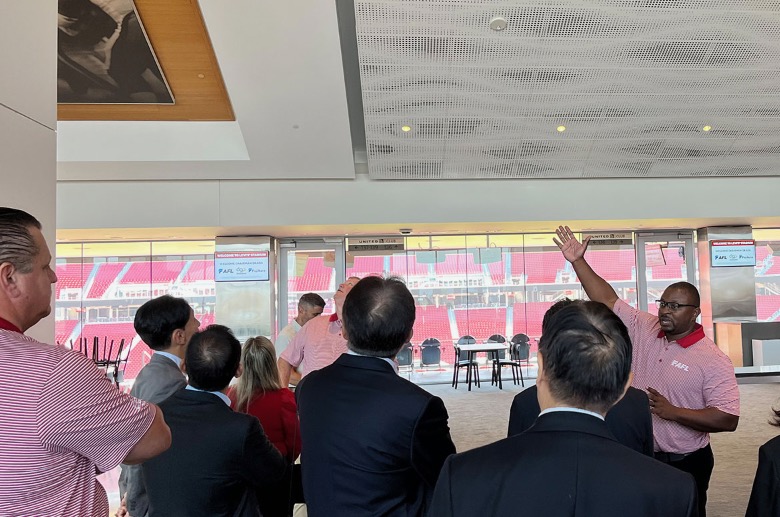
That philosophy has guided Levi’s Stadium’s approach since before it opened in 2014. The 49ers chose a venue-owned, neutral-host DAS model that complements carrier investments while giving the venue greater long-term control, flexibility, and confidence in system performance.
A proven foundation, built to evolve
The original DAS at Levi’s Stadium was engineered and deployed by DAS Group Professionals (DGP), a firm recognized for its leadership in large-venue wireless design and execution. For more than a decade, the system has proven its resilience during Levi’s Stadium’s highest demand events, and continues to evolve as usage patterns and expectations have changed.
In 2024, AFL acquired DGP, formally integrating that venue expertise into AFL Wireless Services and pairing it with the scale, resources, and manufacturing capabilities of a global telecommunications company.
Why the latest upgrade was necessary
The most recent DAS upgrade at Levi’s Stadium was driven by a fundamental shift in how wireless networks are used during live events, with sustained, high-density demand now replacing intermittent connectivity patterns.
Prior to the upgrade, the DAS consisted of 85 zones deployed across two parallel systems, which constrained spectrum efficiency and long-term scalability. AFL Wireless Services reengineered the solution into a single unified DAS, increased the zone count by 23 percent, and modernized the platform to accommodate new public safety capabilities, additional carrier spectrum layers, and next-generation wireless capacity required for large-scale events.
“This upgrade was driven by capacity, not coverage,” said Kladianos. “We needed a system that could absorb sustained, simultaneous use without degradation and align performance with how the venue actually operates during major events.”
Executing inside a live stadium
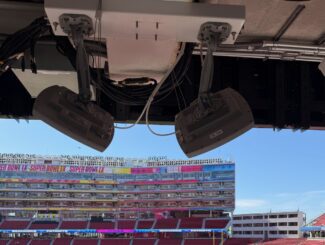
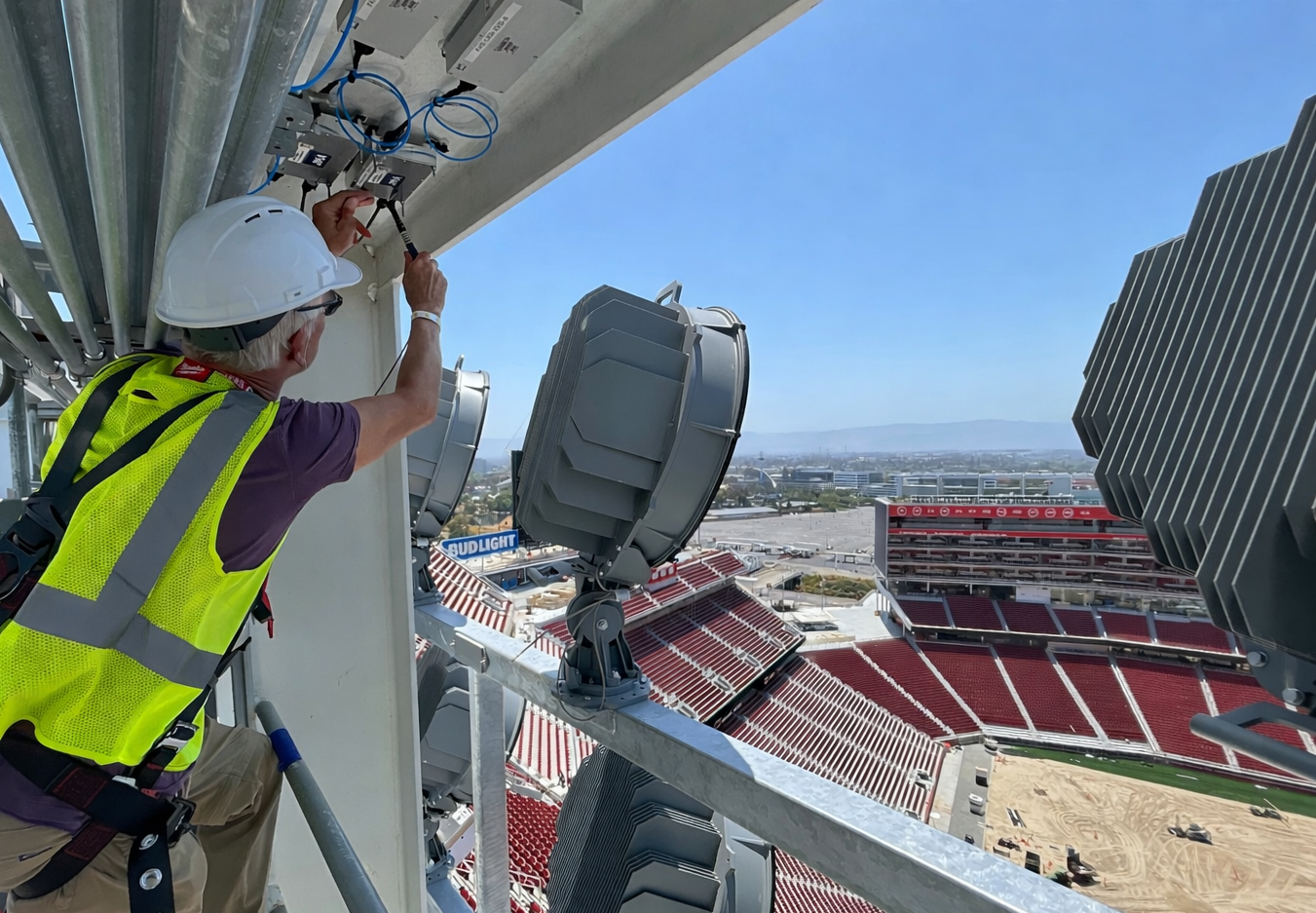
Delivering the upgrade required precise coordination across engineering, construction, and operations, all executed within a tightly defined offseason window. The scope included more than 650 antennas, over 16 miles of coaxial cable, hundreds of mmWave radios, 23 miles of single-mode fiber, and critical power infrastructure upgrades, all within an active, multi-use venue.
“Delivering a DAS of this scale on time and on budget was a significant undertaking,” said Derek Cotton, Vice President of Engineering for DGP. “We navigated challenges at every stage, from complex multi-carrier design and supply-chain constraints to construction coordination within an active venue and final system optimization.”
The upgrade was delivered through close collaboration across AFL Wireless Services, with specialized teams supporting headend construction and integration, engineering validation, system testing, and ongoing performance monitoring. Throughout the process, AFL Wireless Services worked closely with the 49ers’ technology and operations teams and with Tier-1 carriers to align schedules, access, and testing.
“Stadium environments are unforgiving,” Orendain added. “You are working within limited windows, shared spaces, and live operational constraints. The system must perform as intended the first time.”
By completing the upgrade well ahead of February 2026, carriers have been able to test, tune, and optimize performance during live football games, soccer matches, concerts, and other major events, rather than relying on last-minute adjustments ahead of marquee moments.
Built for what comes next
By retaining ownership of its DAS, Levi’s Stadium preserves flexibility as technology continues to evolve. New spectrum layers can be added, capacity adjusted, and future applications supported without renegotiating control or compromising performance.
As Levi’s Stadium prepares for major sports and entertainment events in 2026 and beyond, its successful connectivity strategy reflects deliberate planning and long-term decision-making. “Ownership matters because it has held up,” said Kladianos. “We committed to this model when the stadium opened, and more than a decade later, it continues to scale and perform under the most demanding conditions. That is the outcome we set out to achieve.”