
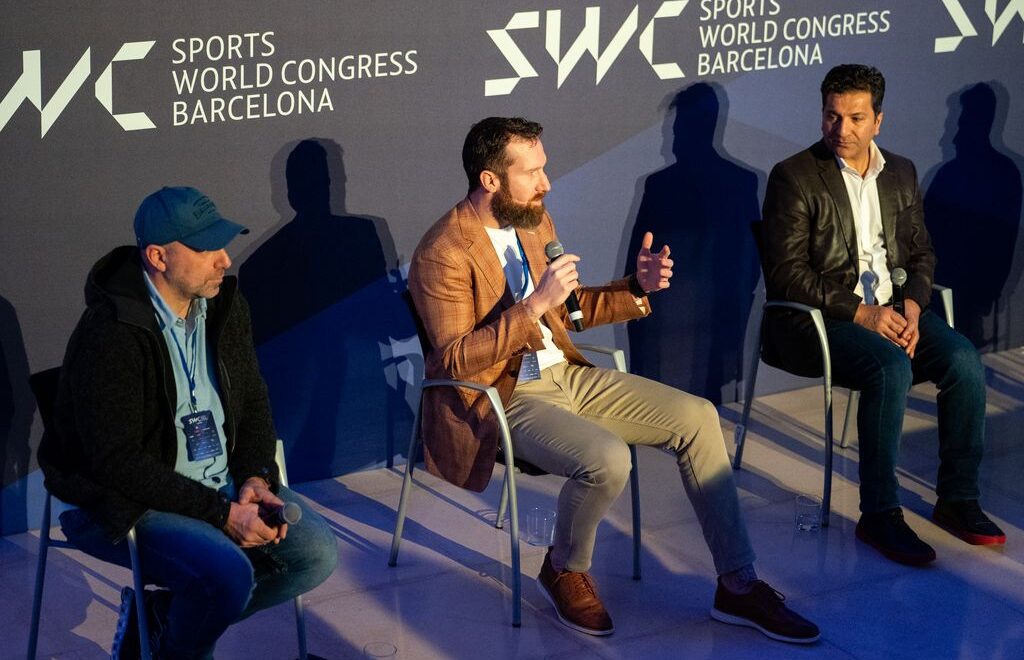
Artificial intelligence and smart stadium technology are quickly becoming some of the most consequential topics in the global sports industry. For US stadium executives looking to understand where this transformation is headed, Sports World Congress offers a rare opportunity to engage directly with the global leaders shaping it. The 2026 edition takes place February 2–3 in Barcelona, bringing together venue operators, technology providers, architects and sports organizations from around the world.
SWC 2026 centers on the theme “Building the Future Together With AI.” Hosted at RCDE Stadium, home of RCD Espanyol, the event is designed to create a high-level forum where stadium owners, operators and partners can explore how artificial intelligence is reshaping the entire lifecycle of sports venues, from design and construction through operations, security, hospitality and fan engagement.
“Sports World Congress 2026 is building upon the success of our previous edition from 2025, with twice as many stadiums and twice as many companies participating as last year,” said Josep Monti, President of HUB23 and chief organizer of the event. “We intend for Sports World Congress to be more than a conference. It is a global meeting point for innovation, data and sports performance, designed to create real business impact and build strategic alliances that shape the future of stadiums.”
High-Level Learning About AI for Stadiums
The 2026 program places AI at the center of nearly every conversation. Through keynotes, expert panels, micro-presentations and one-to-one B2B meetings, attendees will explore how AI is being planned and deployed across the full spectrum of stadium operations. Topics on the agenda include AI-enabled stadium construction and design, safety and security operations, crowd-flow optimization, predictive maintenance, energy management, ticketing and seating optimization, sponsorship and advertising personalization, mobile apps, concessions and retail analytics, and fan engagement tools powered by machine learning.
For US venue leaders, this offers a valuable window into how international peers are adopting AI in practice, including approaches that may not yet be widely deployed in North America.
Learning from Europe’s most advanced stadiums
RCDE Stadium will host Day One of the Congress and serves as a working example of modern European venue design, emphasizing sustainability, energy efficiency and community integration. The venue is equipped with solar generation and has earned international recognition for both facility design and fan experience.
More than 50 stadiums and arenas from across Europe and beyond are expected to participate in Sports World Congress 2026. Among the confirmed venues are The City Ground in Nottingham, The O2 Arena in London, Estadio de la Cerámica in Villarreal, and Anoeta Stadium in San Sebastián. These facilities represent some of the most progressive thinking in stadium operations, technology integration and fan engagement, making the Congress a concentrated learning environment for US executives seeking global benchmarks.
Why It Matters for US Stadium Leaders
With FIFA World Cup 2026 approaching and technology expectations rising across major sports, US venue owners and operators are under growing pressure to modernize. Artificial intelligence will play a central role in how venues manage safety, staffing, energy use, monetization and the fan experience over the next decade. Sports World Congress offers a chance to compare North American strategies with global best practices, many of which are being tested first in Europe and Asia.
Because the event brings together decision-makers from dozens of international venues, it also creates an unusually rich environment for business development, partnerships and strategic insight. For US executives who rarely get face-time with European and global stadium leadership, Barcelona becomes a practical forum for understanding where the industry is headed, and who is shaping that direction.
February 2026 is approaching quickly. Sports World Congress 2026 provides US stadium technology leaders with a timely opportunity to connect with the global community, deepen their understanding of AI-driven venue operations, and participate in a conversation that is increasingly defining the future of live sports.
For those responsible for guiding long-term technology investment, the discussions taking place in Barcelona this February may be among the most consequential of the year.