
A Scalable Neutral Host DAS Architecture Supporting Global Events and Mixed-Use Development
Executive Summary
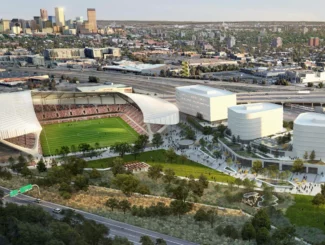
Hollywood Park, home to SoFi Stadium, has emerged as one of the most ambitious mixed-use sports and entertainment developments in the United States, creating new demands for scalable, high-capacity wireless infrastructure. Spanning approximately three hundred acres, the campus integrates stadium, retail, entertainment, hospitality, and public gathering environments that collectively demand seamless, high-capacity wireless connectivity.
The most recent evolution of the venue-owned neutral host Distributed Antenna System (DAS) focused on increasing capacity, improving throughput, and enhancing performance across high-density environments in preparation for upcoming global events in 2026 and 2028.
This phase represents the second major DAS evolution at SoFi Stadium, following the initial C-band expansion completed in advance of a major championship event in 2022. This latest deployment builds on that foundation by integrating additional spectrum, increasing sector density, and expanding coverage across critical fan and operational environments.
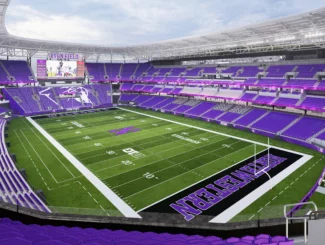
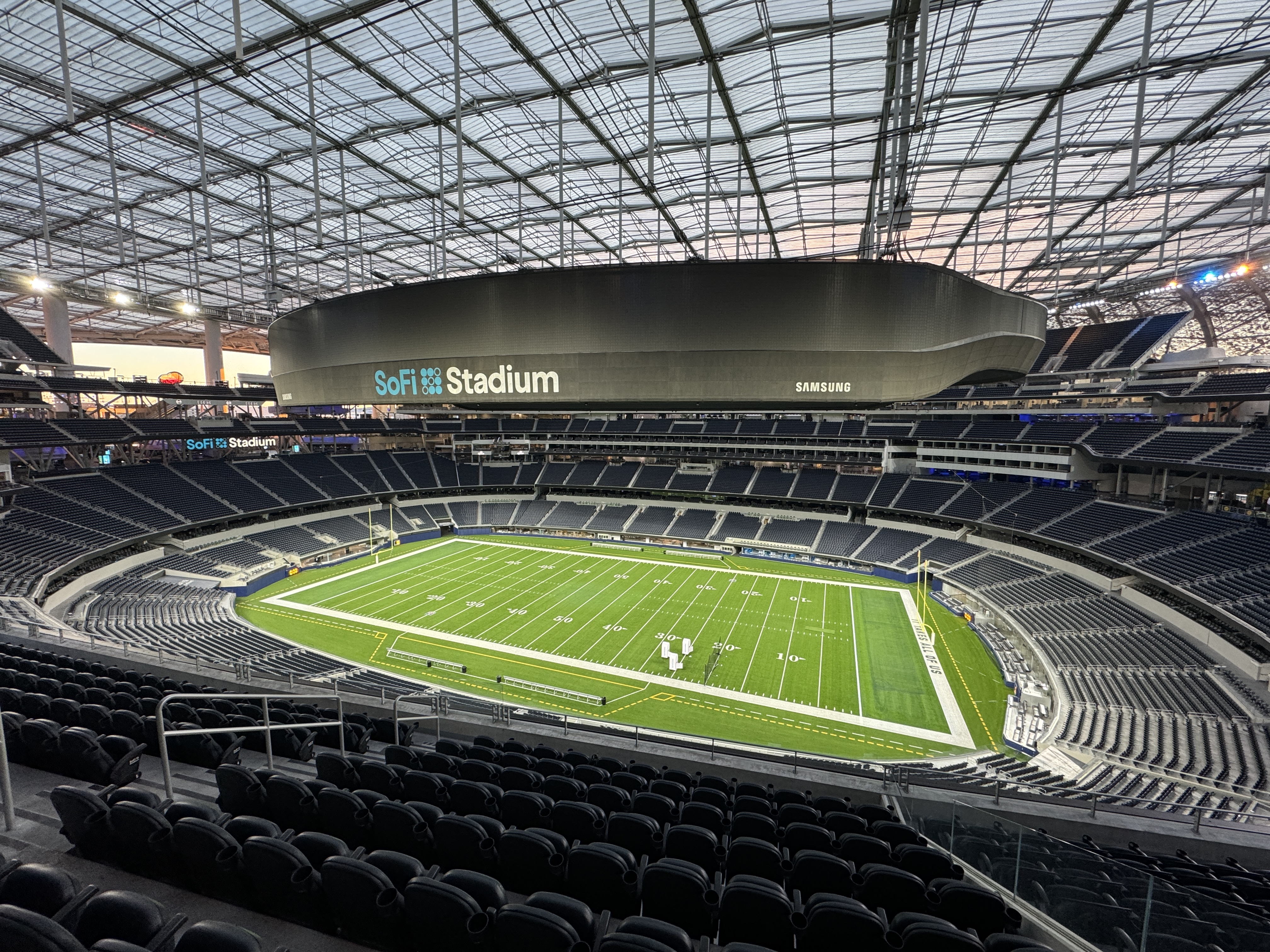
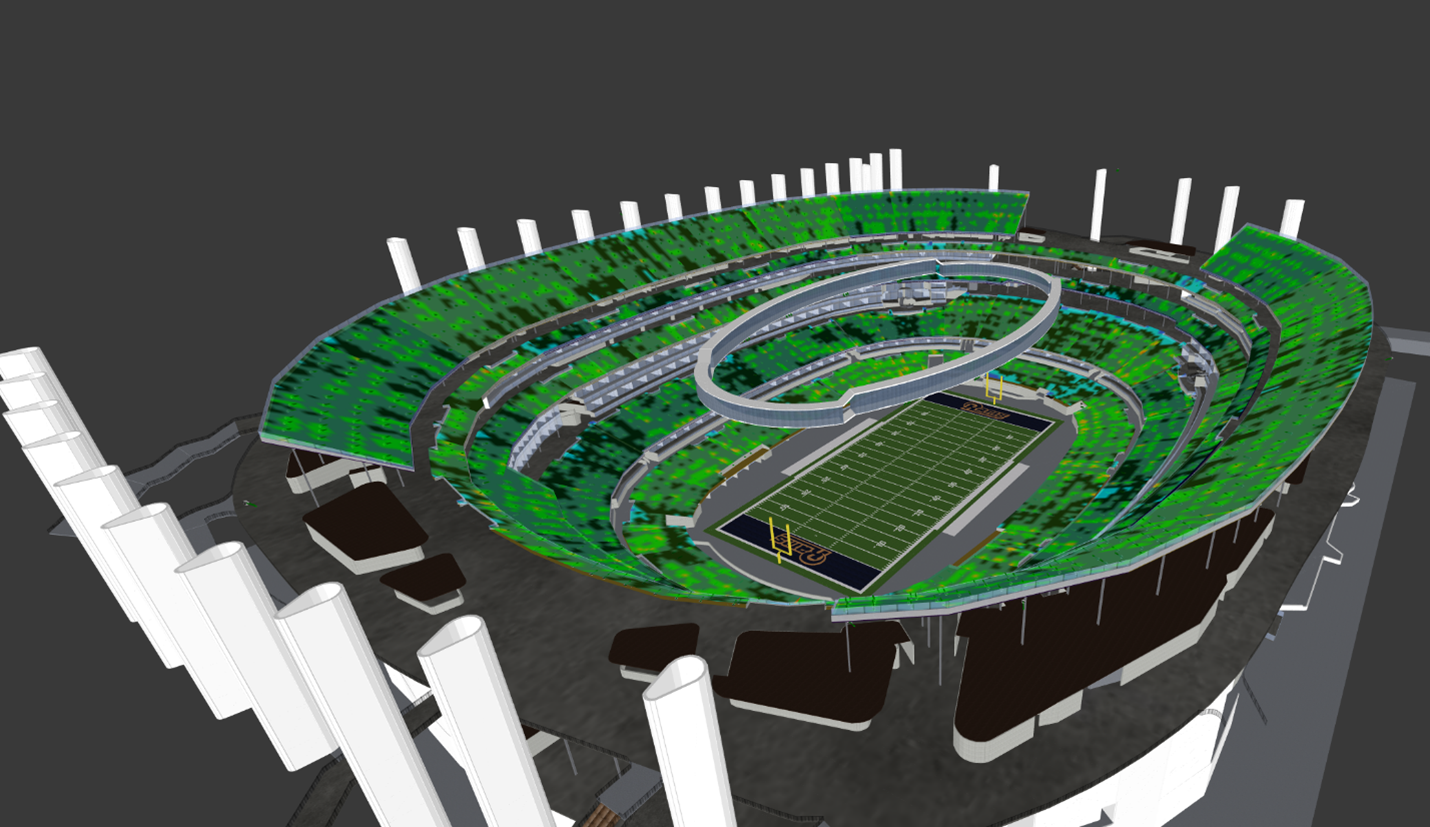
The integration of C-band spectrum into under-seat infrastructure within the stadium bowl significantly improved throughput speeds, from approximately 200 Mbps to approximately 900 Mbps, materially enhancing the fan experience.
Capacity improvements were achieved through targeted densification strategies. Sector count increased by approximately 40% within the bowl, from 189 to 264 C-band zones, and nearly doubled in parking environments, from 25 to 44 zones, enabling improved performance during peak usage scenarios associated with major events.
Additional improvements included increased remote output power to improve coverage consistency and expanded mmWave deployment to support high-bandwidth applications in targeted environments for all three major carriers.
“Through its role as the DAS provider at SoFi Stadium, AFL Wireless Services has supported multiple phases of infrastructure development aligned with the venue’s global event roadmap,” said Hollywood Park CTO Travis Sampson. “These latest enhancements significantly improved both capacity and performance across some of the most demanding wireless environments in the venue.”
The architecture demonstrates how venue-owned neutral host infrastructure can evolve to support future technologies, including additional spectrum bands such as DoD (3.45–3.55 GHz), private 5G networks, edge computing environments, IoT systems, and AI-driven network optimization.
Project Overview
The DAS expansion focused on increasing capacity, improving sector density, and extending coverage across critical fan and operational environments.
Key deployment elements include:
- Approximately 75 C-band under-seat zones within the stadium bowl
- Field-level coverage sectors supporting high-density user environments
- Coverage across fifteen premium suite environments
- Hundreds of mmWave node locations
- Coverage across six parking environments
- Integrated indoor and outdoor coverage across the stadium campus
Primary drivers for this phase included rising capacity requirements driven by global events, evolving user behavior, and the need to support high-density connectivity across multiple venue environments.
The scope of this phase was limited to stadium and parking environments and did not include expansion into retail or residential areas of the broader district.
Design Challenges and Engineering Approach
One of the primary engineering challenges involved increasing network capacity while preserving the architectural integrity and aesthetic design of the venue environment.
Under-seat antenna deployment strategies enabled increased sector density within the bowl while minimizing visible infrastructure. This approach improved signal-to-noise performance and user experience without compromising the premium visual standards of the venue.
Integration of C-band spectrum into the under-seat infrastructure required careful coordination across RF engineering, construction, and operational teams to ensure compatibility with existing systems and minimal disruption to ongoing venue activities.
In parallel, mmWave nodes were strategically deployed to support peak-demand connectivity scenarios in targeted environments such as field-level zones and premium suite areas. Enhancements to Level 200 suites and field-level coverage further strengthened performance in high-demand user environments.
Increased remote output power was implemented to improve overall coverage consistency, particularly in transitional and high-density areas.
Balancing performance objectives with operational constraints required coordinated execution across multiple disciplines, including engineering, construction, and venue operations.
Performance Outcomes
The enhancements delivered measurable improvements in both capacity and performance:
- Throughput increased from approximately 200 Mbps to approximately 900 Mbps
- Sector density increased by approximately 40% within the stadium bowl
- Parking lot capacity nearly doubled through sector expansion
- Coverage consistency improved through increased output power and targeted densification
- Enhanced performance in high-density environments including field-level zones and premium suites
These improvements position the venue to support the increased demand associated with global events while delivering significantly enhanced user experience.
Neutral Host Architecture Advantages
The Hollywood Park deployment operates under a venue-owned neutral host DAS model supporting multiple wireless carriers through shared infrastructure.
Key advantages include:
- Greater visibility into network performance and capacity utilization
- Flexibility to expand infrastructure aligned with evolving requirements
- Reduction of redundant carrier infrastructure deployment
- Long-term alignment with technology roadmaps and spectrum evolution
- Improved coordination across carriers for major global events
The venue-owned model also enables greater control over user experience and infrastructure strategy, differentiating it from traditional carrier-owned deployments.
District-Scale Connectivity
Unlike single-structure venues, mixed-use developments such as Hollywood Park require connectivity across multiple environment types, including:
- Stadium seating environments
- Outdoor gathering areas
- Parking facilities
- Entertainment venues
- Hospitality environments
- Operational and back-of-house spaces
As additional retail and residential environments come online within the broader district, the infrastructure can continue evolving to support future connectivity requirements.
Integration Considerations
The DAS architecture supports future integration with evolving wireless technologies and operational platforms. Wi-Fi integration was not part of this phase.
Potential integration areas include:
- Additional spectrum bands, including DoD spectrum (3.45–3.55 GHz)
- Private 5G network environments
- Edge computing platforms
- IoT sensor networks
- Location-based services
- Public safety communication systems
AFL fiber infrastructure products were utilized within the deployment, including fiber used in new outdoor DAS pole infrastructure supporting the oDAS environment.
Role of AFL Wireless Services
AFL Wireless Services provides integrated capabilities across RF engineering, system design, deployment, optimization, monitoring, and lifecycle support.
This deployment reflects AFL’s ability to execute complex, high-density wireless infrastructure projects within active venue environments while maintaining alignment with long-term operational and customer objectives.
The project also highlights AFL’s role in supporting venue-owned infrastructure models that prioritize performance, scalability, and operational control.
Lessons Learned
Key insights from the Hollywood Park DAS evolution include:
- Early infrastructure planning enables long-term scalability
- Under-seat deployment strategies improve performance while preserving aesthetics
- Neutral host architecture provides flexibility for multi-carrier environments
- Designing for global event demand ensures long-term infrastructure value
- Coordinated execution across engineering, construction, and operations is critical in active venue environments
Conclusion
Connectivity infrastructure now plays a foundational role in enabling modern sports and entertainment districts to operate efficiently and deliver high-quality user experiences.
The Hollywood Park DAS evolution demonstrates how scalable neutral host infrastructure can support high-density environments, major global events, and long-term technology flexibility.
As venue ecosystems continue to grow in scale and complexity, connectivity infrastructure is increasingly positioned as core operational technology supporting both fan engagement and venue performance.
 About the Author
Michael Orendain leads the Wireless Services division with a strong focus on innovation and customer satisfaction. His extensive project experience, including successful oversight of large-scale wireless projects, sets him apart. With a solid background in construction and project management, Michael ensures efficient, high-quality project execution. His deep technical expertise in wireless technologies drives the division forward, keeping AFL at the industry’s forefront.