
A new Stadium Tech Report technical brief shows why channel reuse may be the key to increasing wireless capacity in the seating bowl.
For a stadium owner, the wireless goal is pretty simple: make sure tens of thousands of phones work when the building is full.
That requires capacity.
Much of the progress in wireless capacity has come packaged as new generations of technology: more spectrum, more efficient use of that spectrum, and increasingly capable radios. 5G, Wi-Fi 6 and Wi-Fi 7 have all brought meaningful advances, with more still to come.
But a little history and some simple math point to another opportunity that may be even more important when capacity is the goal: channel reuse.
A new Stadium Tech Report technical brief, written by Bill Anderson and Wesley Terry of AmpThink, shows the math behind that argument. The paper goes deep on the technology, but the basic idea is easy to understand. A wireless network can carry more traffic by accessing more spectrum, carrying more data over that spectrum, or using the same spectrum channels simultaneously in more places.
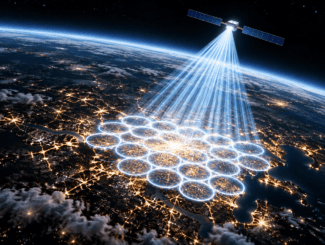
That third lever, channel reuse, has accounted for the lion’s share of the historical growth in wireless capacity. And hyper-directional design gives stadiums a powerful new way to exploit it in the seating bowl.
The brief, Hyper-Directional Wi-Fi for the Stadium Bowl, focuses on what that means for venue design.
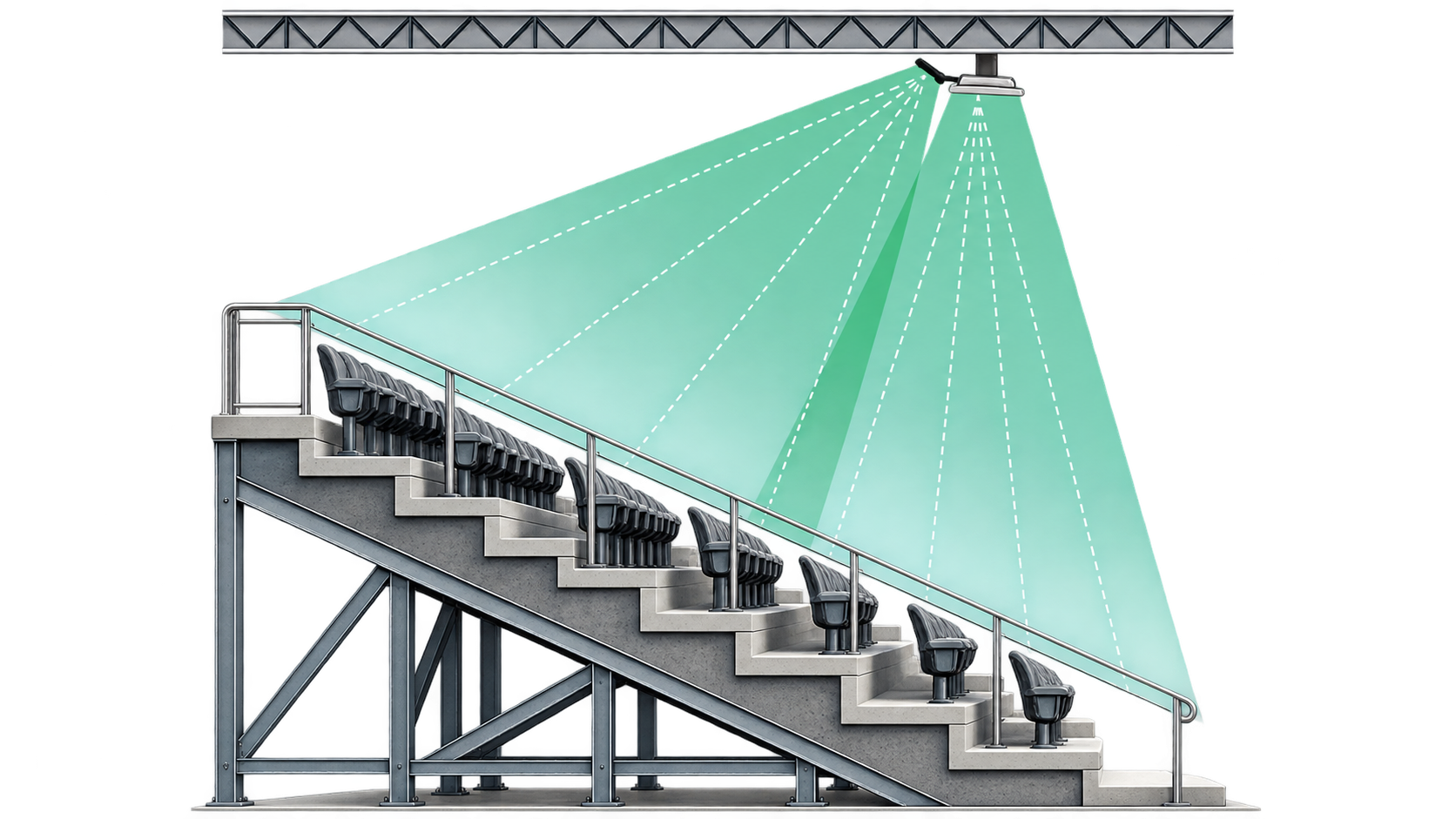
The underlying challenge to channel re-use is interference. A stadium can keep adding radios, but if too many neighboring radios are trying to use the same channels, they begin competing with one another. At some point, adding density produces less benefit than expected.
Hyper-directional systems attack that problem by creating tightly focused coverage areas. Instead of spreading a wireless signal broadly, they aim it at a specific seating section and limit how much of that signal reaches neighboring sections.
That makes it possible to reuse the same channels more aggressively across the bowl.
For an owner, the takeaway is less about antenna theory and more about where to invest.
If the objective is more capacity, it is worth asking whether the building can support a design that makes better use of channel reuse. That question can come before the decision about which specific products to buy.
This is especially relevant for new stadiums.
Hyper-directional systems need suitable overhead mounting locations and clear lines of sight into the seating bowl. Some existing venues may not have those assets. A new building can create them intentionally.
Roof structure, catwalks, scoreboards and other overhead locations can become part of the wireless plan while the stadium is still being designed, rather than constraints discovered later.
Once an owner decides that hyper-directional coverage is the right strategy, there are multiple ways to implement it.
The technical brief examines two approaches. One uses electronically controlled antennas to create and shape focused beams. The other uses passive lens technology to form multiple fixed beams from fewer mounting locations.
Both are designed to accomplish the same thing: isolate coverage areas well enough to reuse spectrum more aggressively. They differ in mounting requirements, cabling, power, maintenance, flexibility and cost.
The paper does not argue that one approach is universally better. The right choice depends on the venue, including its geometry, available mounting structure, operating priorities and commercial objectives.