
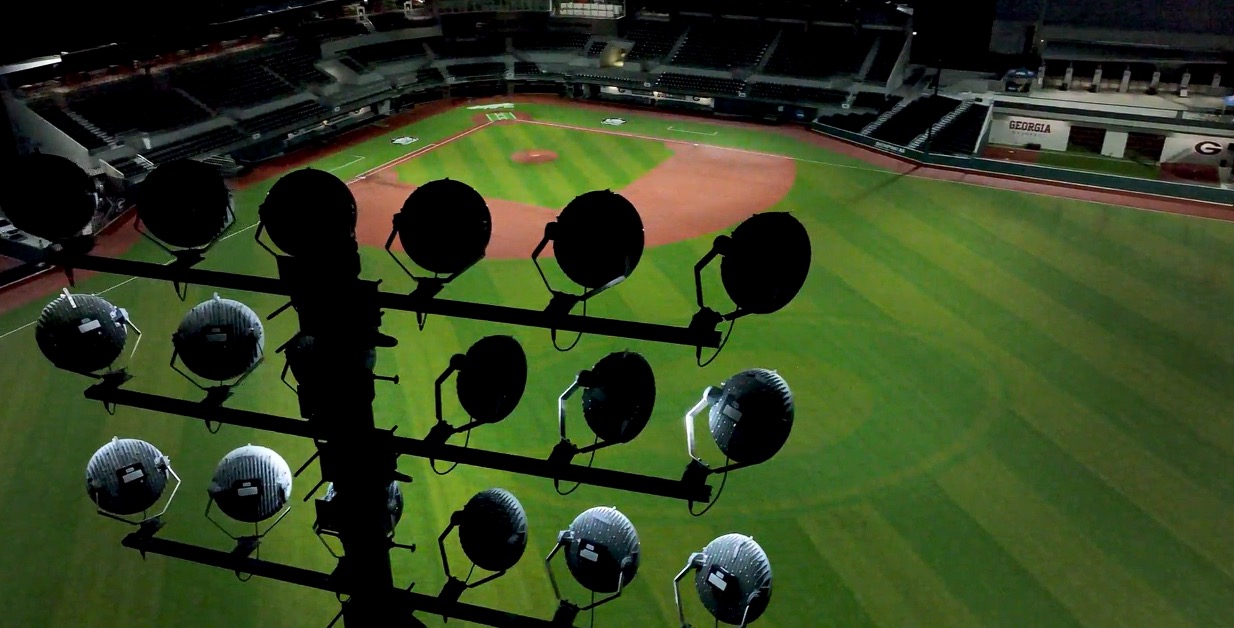
A widespread deployment of new lighting technology at University of Georgia sports venues has brought more pizzazz along with numerous operational and business benefits, according to school executives.
While flashing lights and changing colors are the most visible features of the new lighting fixtures, the ability to remotely or automatically manage and orchestrate lighting effects has allowed Georgia to increase revenues through hosting more events, while also trimming administrative demands and improving athletic performance and recruiting.
Thanks to advanced features found in many current LED systems, including networked controls, new deployments like the ones at Georgia can pre-set lighting programs that can be activated by simply pressing a button on an associated app.
The new administrative features, when combined with the inherent power and upkeep savings LED fixtures have over previous technologies, are making xLED lights a no-brainer for venues of all shapes and sizes. According to lighting company executives, deployments like Georgia’s upgrades at its “secondary” venues are taking place rapidly across the U.S., from larger universities to smaller colleges to numerous high school and city sports venues as well.
The stadium LED lighting revolution continues to spread
In the not-too-distant past, the technology behind stadium lighting was dominated by metal halide lights, which were known for their bright output as well as the lengthy “warm-up” times it took the fixtures to reach full illumination. That time-delay flaw was perhaps burnt into big-sports infamy during Super Bowl XLVII on Feb. 3, 2013, when a power outage at the Mercedes-Benz Superdome in New Orleans plunged half of the stadium into darkness, halting the game for more than a half hour until the lights could be restored.
For large venues, the change to LED lighting technology started soon thereafter, with Super Bowl XLIX two years later at the then-named University of Phoenix Stadium in Glendale, Ariz., being the NFL’s first big game to be lit completely by LED lighting. The Seattle Mariners installed LED lighting at then-named Safeco Field in 2015, helping lead the way to what would eventually become by 2026 an almost-universal switch to LED systems for large professional stadiums and arenas.
In a side-by-side technology comparison, the benefits of LED versus metal halide were simple to see. In addition to the “instant on” capability of LED systems, the newer technology also used much less power per fixture than its predecessor. Thanks to the normal advance of technology manufacturing, LED systems eventually became cheaper to purchase overall, making the changeover decision much easier from an ROI perspective.
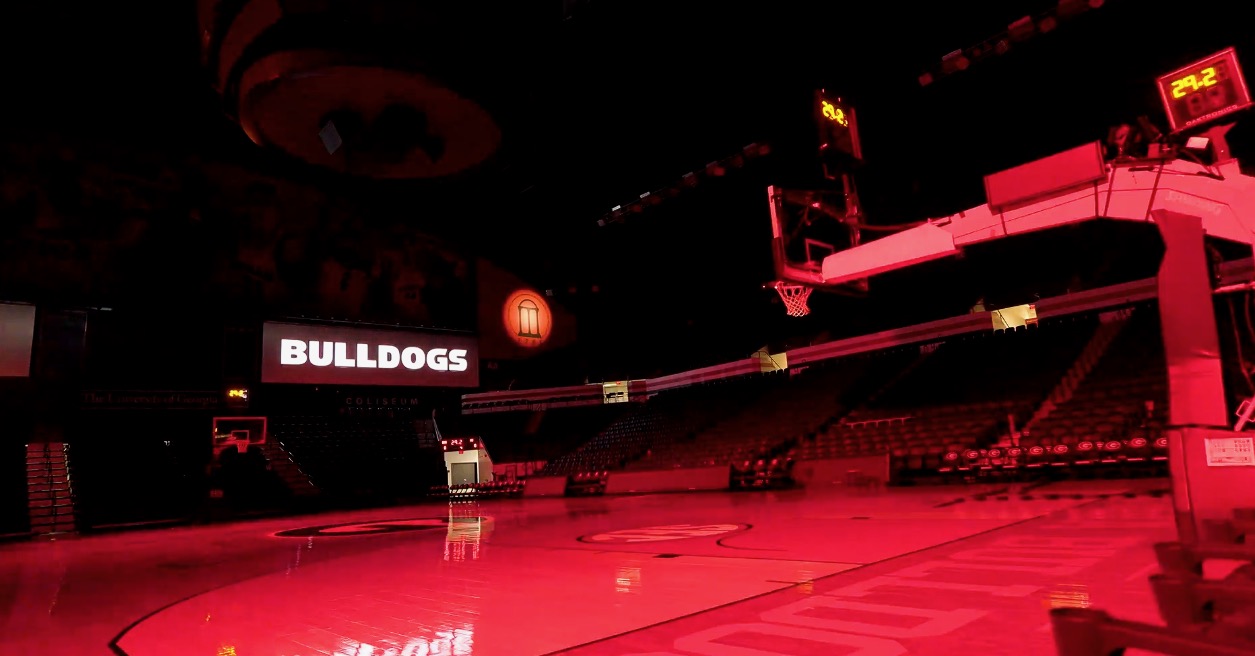
For stadiums specifically, the ability to fine-tune LED systems to fit the different brightness demands for different sports and television broadcasts was also a big positive, especially for larger stadiums or multi-purpose arenas, which no longer had to rent extra or specialized lighting or perform physical re-aiming of lights to host different events.
And in recent years, more advancements in LED lighting technology have brought more “showtime” elements to the systems, such as the ability to instantly change lighting color, and to support other features like flickering or sparking light systems that could be programmed to not just show effects, but to show them synchronized with music or video programming on other venue systems. Like other venue components that were once standalone technology islands, stadium lighting is now becoming just another part of a converged network of services driving greater efficiency across venue operations.
Big-time pizzazz is what’s pushing LED light purchases
At the University of Georgia, the era of new-wave lighting systems debuted on Sept. 21, 2019, when the Bulldogs’ home game against Notre Dame wowed fans at Sanford Stadium with effects like all-red light moments for pregame and touchdowns. The then record-setting crowd of 93,246 enjoyed the 23-17 victory by No. 7 Georgia over No. 8 Notre Dame as a new tradition of entertainment was born in Athens.
The approximately $1 million system installed at Sanford Stadium used fixtures from Ephesus Lighting (now a part of Cooper Lighting Systems), one of the leaders in the field of large-venue lighting solutions. As a member of the SEC, one of the highest-profile conferences in the U.S. college football world, Georgia’s game-day football light shows now engage in a “battle” of their own with their conference peers, with millions of fans watching weekly on televised broadcasts.
Tanner Stines, associate athletic director for capital planning and auxiliary administration at the University of Georgia, oversees auxiliary revenue initiatives, including concerts, outside rentals, alternative sporting events, and live entertainment. He lauds LED lighting for helping to create new opportunities to maximize the value and year-round use of Georgia’s athletic venues. But when it comes to purchasing decisions for LED systems, even Stines said it’s the sizzle that sells.
“It’s all about trying to fight the at-home experience,” Stines said of the overwhelming ROI item for LED lighting. “That goose-bump feeling you get when the stadium goes dark and then all red, when the lights and fireworks explode after a score, that is what you can never get at home.”
Though he said Georgia doesn’t granuarly measure things like power savings per tower or fixture, Stines said the newer LED systems offer clear benefits.
“In the past, we just used to leave the metal-halide lights on for hours when we knew we would need them, so we didn’t have to wait for them to warm up,” Stines said. He also noted that LED systems are a necessity if your venue regularly has national TV broadcasts of games, to guard against problems like power surges or momentary outages.
“We all get power outages, and if you still have the old lights, that’s 20 minutes out of an NCAA broadcast to warm up the lights. That’s getting into business loss insurance costs,” Stines said.
LED lighting moves to smaller venues
As venues of all shapes and sizes seek to recreate the “big game” lighting experience, the industry is seeing overall pricing for systems decline with technology advancements and increased competition. According to several sources in the industry, if a large football or baseball stadium system can cost somewhere between $2 and $3 million, LED systems for smaller venues like college baseball, soccer and softball stadiums, or large high school venues, can typically cost in the hundreds of thousands of dollars to install, depending on the size and features.
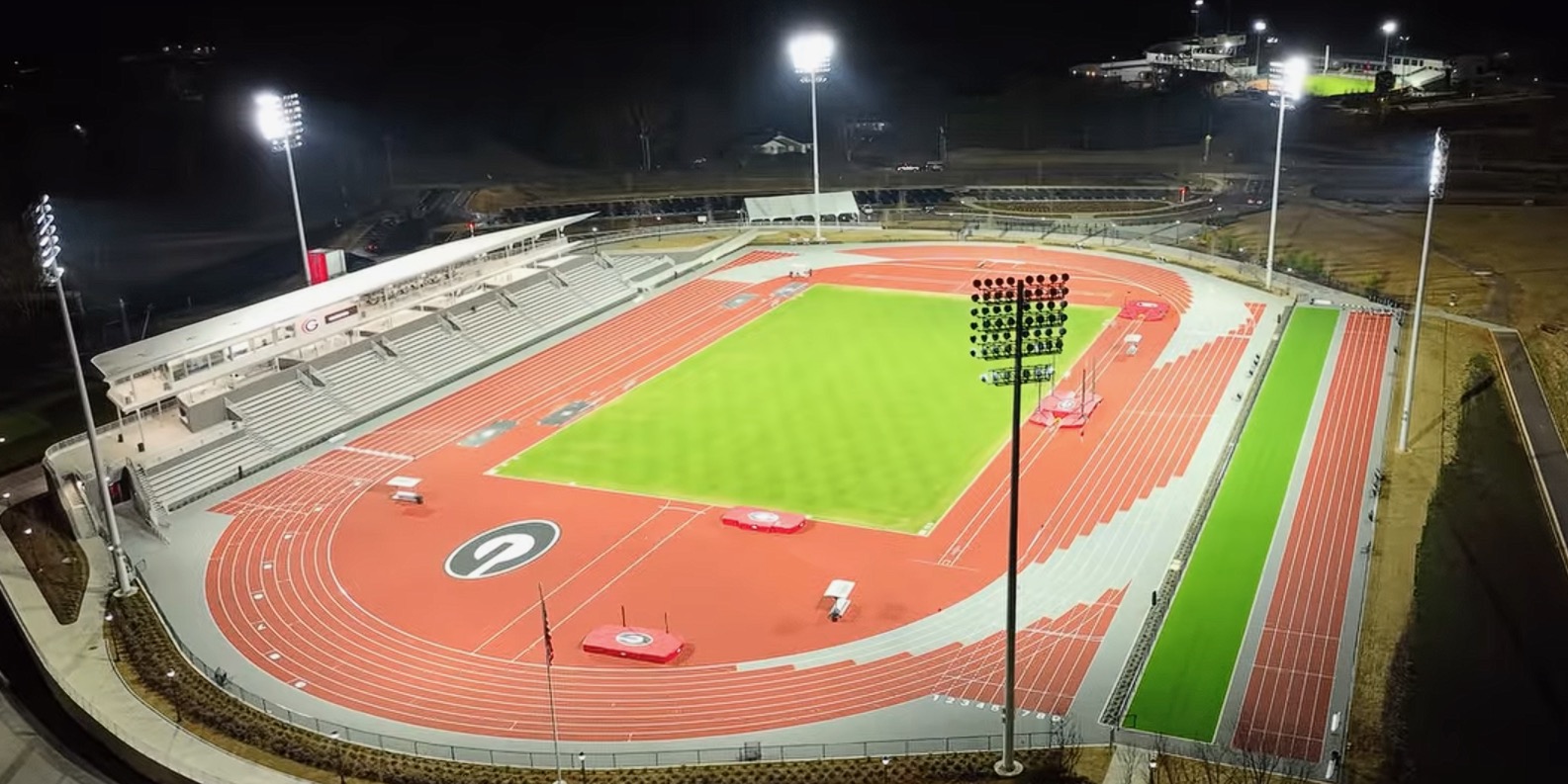
Over the last two years, the University of Georgia has been installing new LED lighting fixtures at most of its non-football venues, including Stegeman Coliseum, a 10,523-seat venue used for men’s and women’s basketball as well as gymnastics and volleyball, and the school’s baseball, softball, soccer and track and field venues.
Alongside the built-in economic and administrative benefits of LED lighting (including reduced upkeep due to the longer life of each fixture), Stines said bringing high-quality lighting to all venues was a necessary part of the competitive battle to recruit top athletes and produce winning teams.
Even though sports like baseball and soccer may not have regular national TV broadcasts, Stines noted that streaming video and sports highlights production benefit greatly from having broadcast-quality brightness and tuning. Competitively, athletes can provide input to lighting technical crews about eliminating glare and improving brightness to improve game-day performances.
“Having great lighting is a competitive advantage for athletes,” Stines said. “We can tell all our athletes that you will have the best place to perfect and show your skills.”
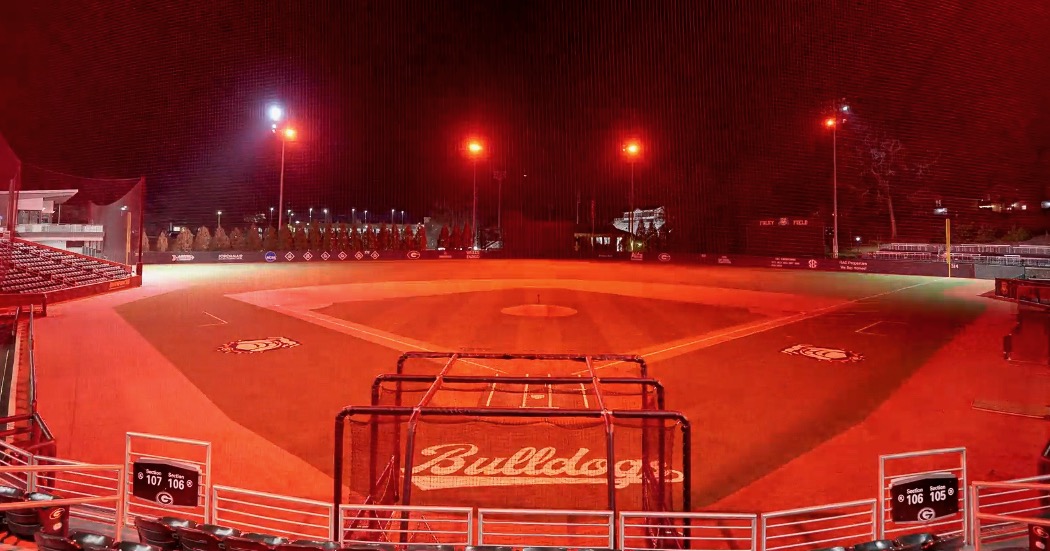
And if those effects are now table stakes for all kinds of sports these days, the systems installed recently at the school’s smaller venues (by integrator PSG Energy Services of Macon, Ga., using lighting fixtures from CHM Lighting of Saginaw, Texas) are also fully programmable — meaning that when a baseball coach wants to show a recruit the stadium, the coach can click an app on his phone to activate the “home run” effect of sparkling red and white lights, a much more effective selling point than having to wait for a maintenance person to come and unlock the lights box to manually operate the systems.
“With the old lights, when we had a wedding reception in the football stadium, we would turn the lights on at noon to make sure they were working, and just burn the lights for 12 hours,” Stines said. “Now, one intern can run the lighting for a wedding ceremony, just by hitting the pre-scripted application, instead of having to have two people there. It can be red when the guests arrive, sparkly when the bride and groom come in, and dim to red when it’s time to leave.” Networked light controls also allow grounds crews and venue maintenance and cleaning workers to turn lights on and off as necessary. At a higher level, lighting effects can now be recorded and synchronized with the overall venue show control, allowing the videoboard and sound show operators to be able to activate lighting effects with another simple button-push or script addition.