

For decades, the concert merchandise table has worked roughly the same way.
A fan walks into a venue already committed to buying. The hoodie, tour shirt, poster, hat, or limited-run item is part of the event. That purchase serves as proof of attendance, a memory, a signal to other fans, and in some cases, the only physical object that leaves with the person who bought the ticket.
But to buy that item, the fan must first stand in line.
The line is the quiet enemy of merchandise revenue in live entertainment. It builds before the show, spikes between sets, and lengthens after the encore, when the buying impulse is the strongest, but the patience window is the shortest. Fans who were ready to spend can drift away rather than stand in that line. Others may buy less than they planned because the process takes too long. Operators must add staff and registers, increasing costs, but the purchase window does not expand.
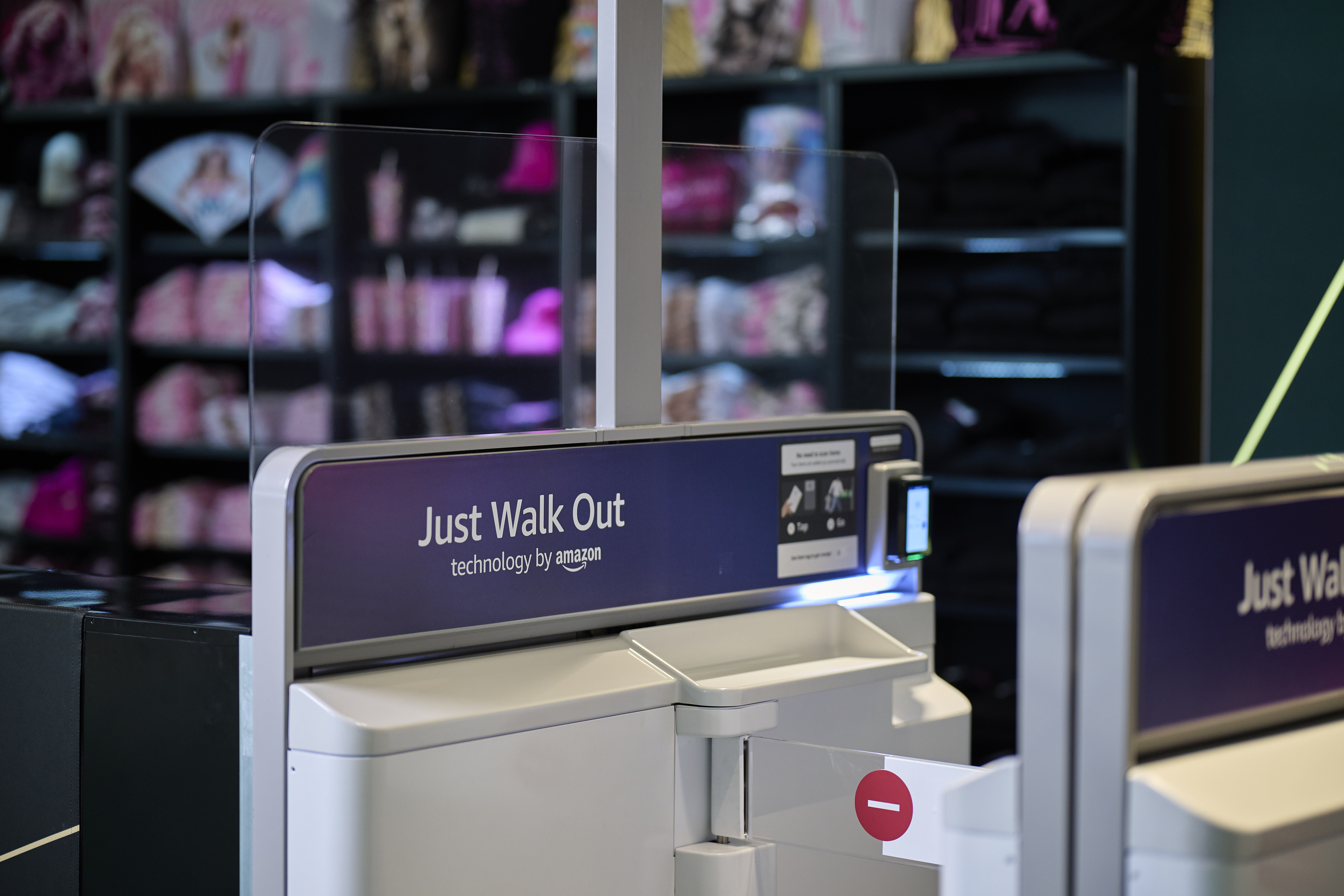
That’s where Amazon’s Just Walk Out technology comes in. Just Walk Out is bringing frictionless retail to live music merchandise, using RFID-powered lanes to remove the need for item-by-item scanning. In the live music market, this technology is designed to help artists, promoters, merchandise teams, and venue operators capture more merchandise demand during short, high-volume sales windows.
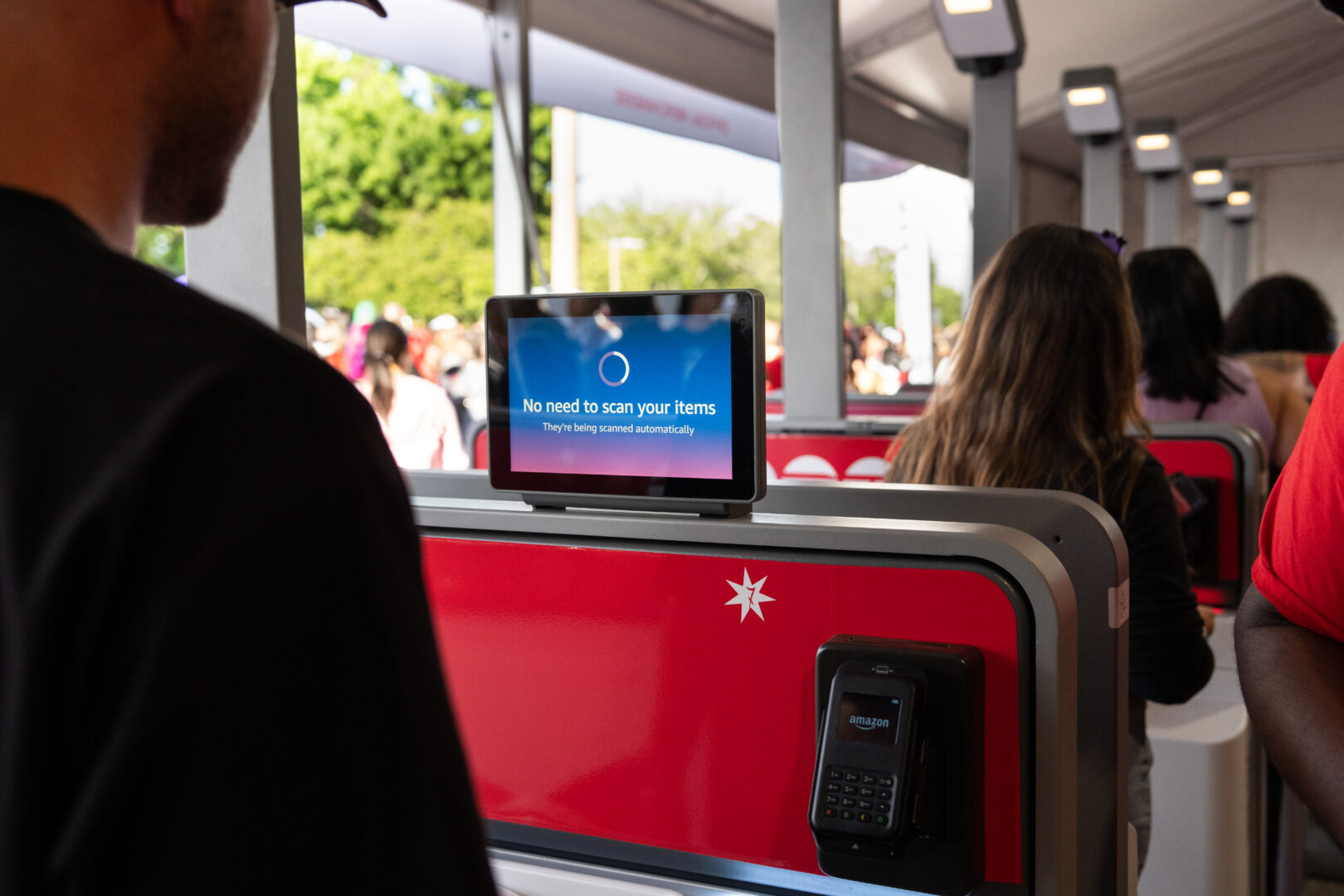
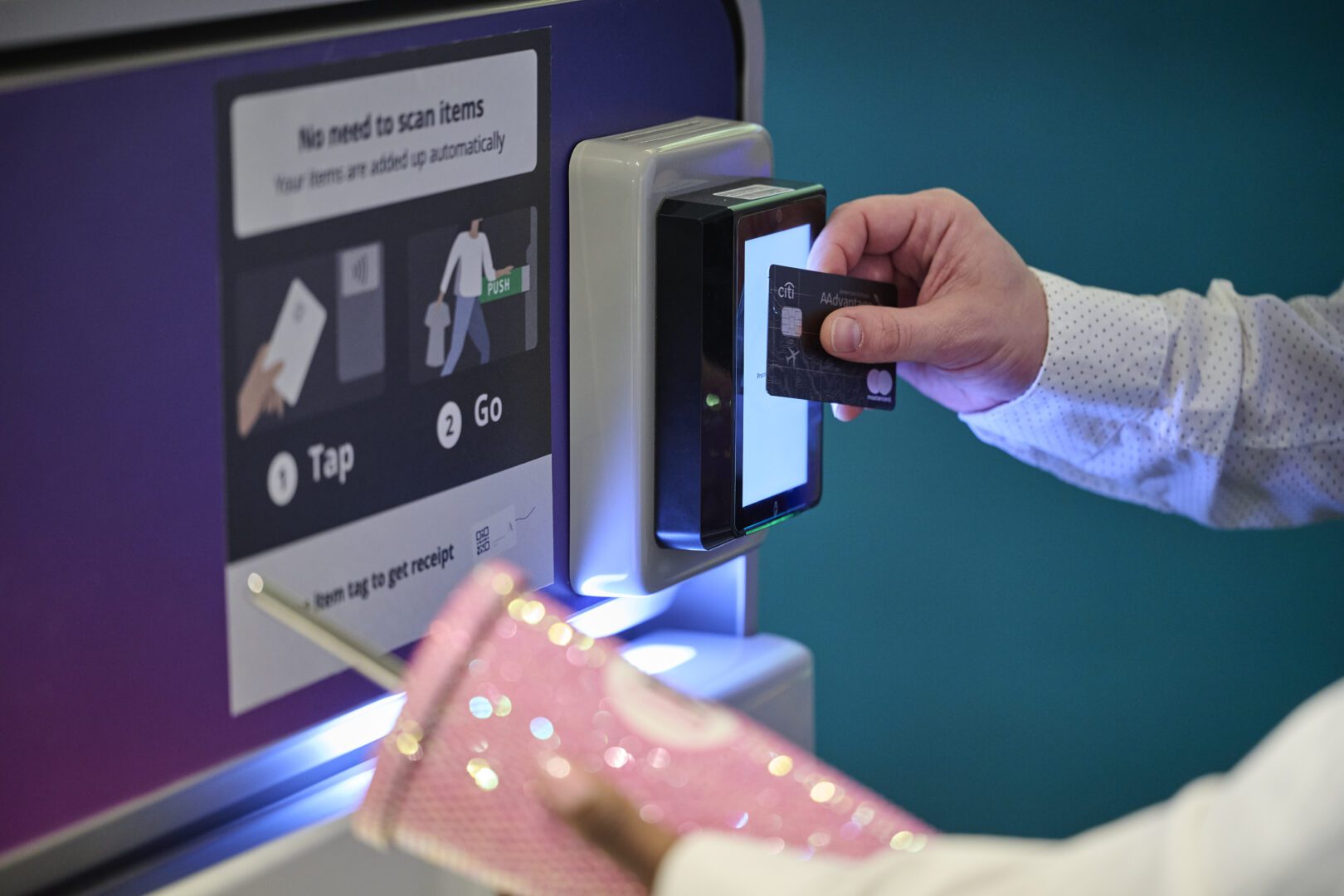
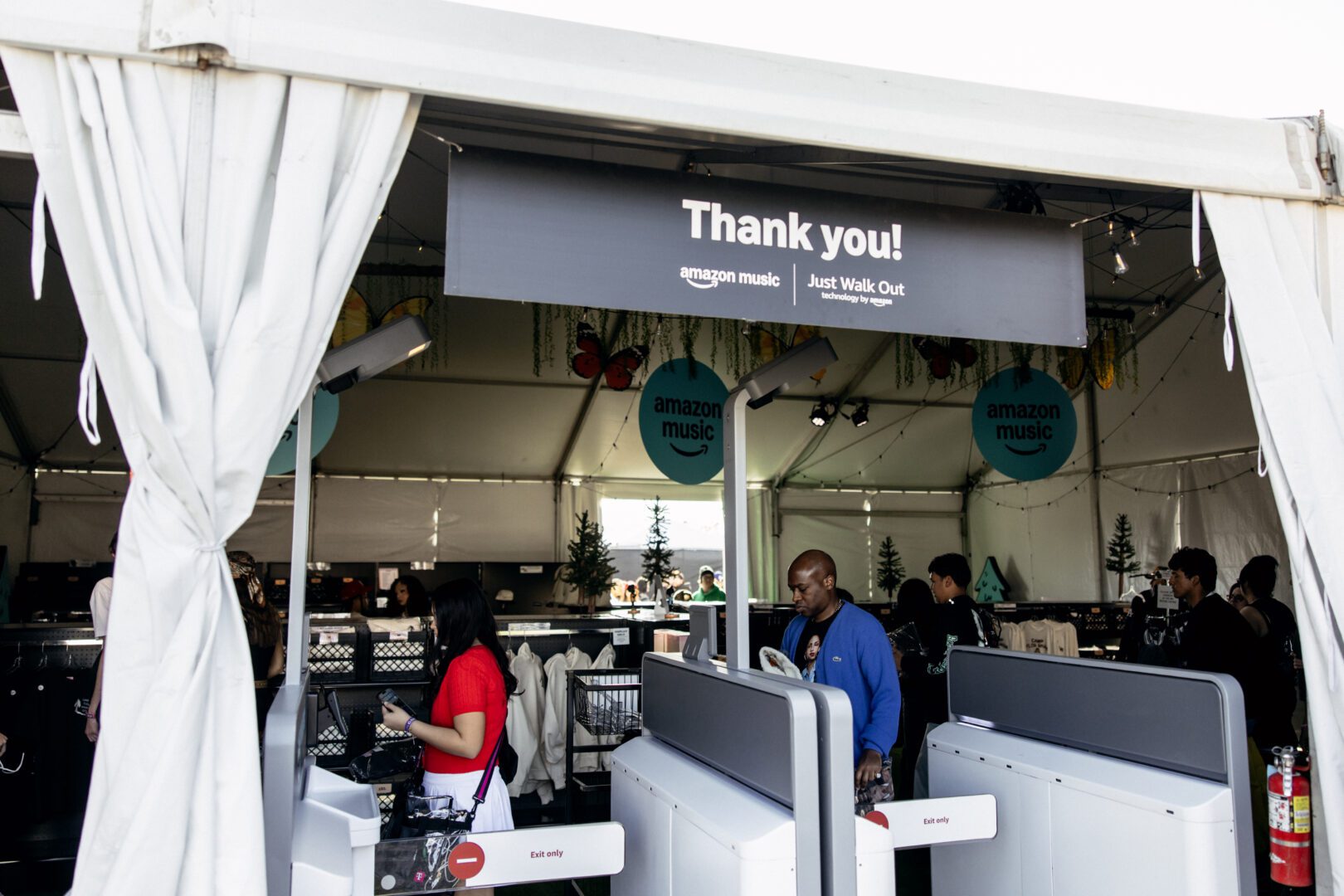
For fans, the experience is simple: browse merchandise, select what they want, tap to pay, and leave. Just Walk Out RFID lanes are designed to preserve the browsing experience while removing the item-by-item scanning step. Each merchandise item is tagged with an RFID tag that carries a unique item-level identifier. As shoppers pass through the RFID-enabled lanes, the system detects the products, builds the basket, and charges the customer through the connected payment system. Fans browse, choose what they want, tap their payment method, and exit through the RFID lane.
One of the clearest examples of innovation in this space comes from Amazon Music. Working with artists, tours, festivals, and fan activations, Amazon Music has used Just Walk Out RFID lanes to show how frictionless merchandise retail can work across concerts, residencies, arenas, festivals, and pop-ups.
For stadium and arena operators, the relevance extends beyond Amazon Music. Many venues are trying to bring more concerts, festivals, and special events into buildings and districts originally built around sports. A venue may be asked to support a touring merchandise operation using Just Walk Out RFID lanes, or it may see the same flexible checkout model as a tool for its own event merchandise, team merchandise, or sponsor activations. The Amazon Music deployments offer a practical set of case studies for understanding where portable frictionless retail can fit.
The challenge in live entertainment is time. You have a limited window to get 45,000 fans into the building, let alone get them through a merchandise line. Just Walk Out technology lets us reduce transaction time so we can serve more fans in that same window.
Julia Heiser, Head of Amazon Music Live Merchandise
How Amazon Music uses RFID for a better fan experience
Across its 2025 deployments, Amazon Music used Just Walk Out RFID across six event experiences, from artist residencies and pop-ups to arenas and festivals. The deployments show how the same checkout model can support a variety of live entertainment formats. Across the deployments, Amazon Music was able to serve thousands of fans and generated a meaningful revenue lift compared with traditional merchandise booths.
At Mariah Carey’s Las Vegas residency, a Just Walk Out-enabled store helped drive the highest merchandise booth revenue and produced both higher cart size and per-head spend than traditional booths.
The residency format gave the retail operation something a one-night concert cannot: repetition. A residency creates multiple opportunities to observe demand, refine the shopping experience, and apply sales lessons learned from one performance to the next. For venues that regularly host concert runs, seasonal shows, or recurring entertainment programming, residency-style deployments are one of the clearer examples of how RFID could support an in-venue retail model.
LE SSERAFIM used the technology differently, through pop-up activations outside of the venues in Los Angeles and Seattle. The Los Angeles activation took place at an Amazon MGM Studios sound stage. The Seattle activation took place outside the Seattle Spheres.
Those pop-ups point to a different use case: merchandise retail that is not tied to a permanent concourse store or even a traditional venue location. The retail experience can move closer to fans, media moments, brand activations, or artist-driven gatherings. For mixed-use districts and sports campuses, that is a relevant signal. Many venues now control plazas, exterior gathering spaces, and sponsor activation zones. Portable RFID checkout gives operators another way to support retail in those temporary footprints.
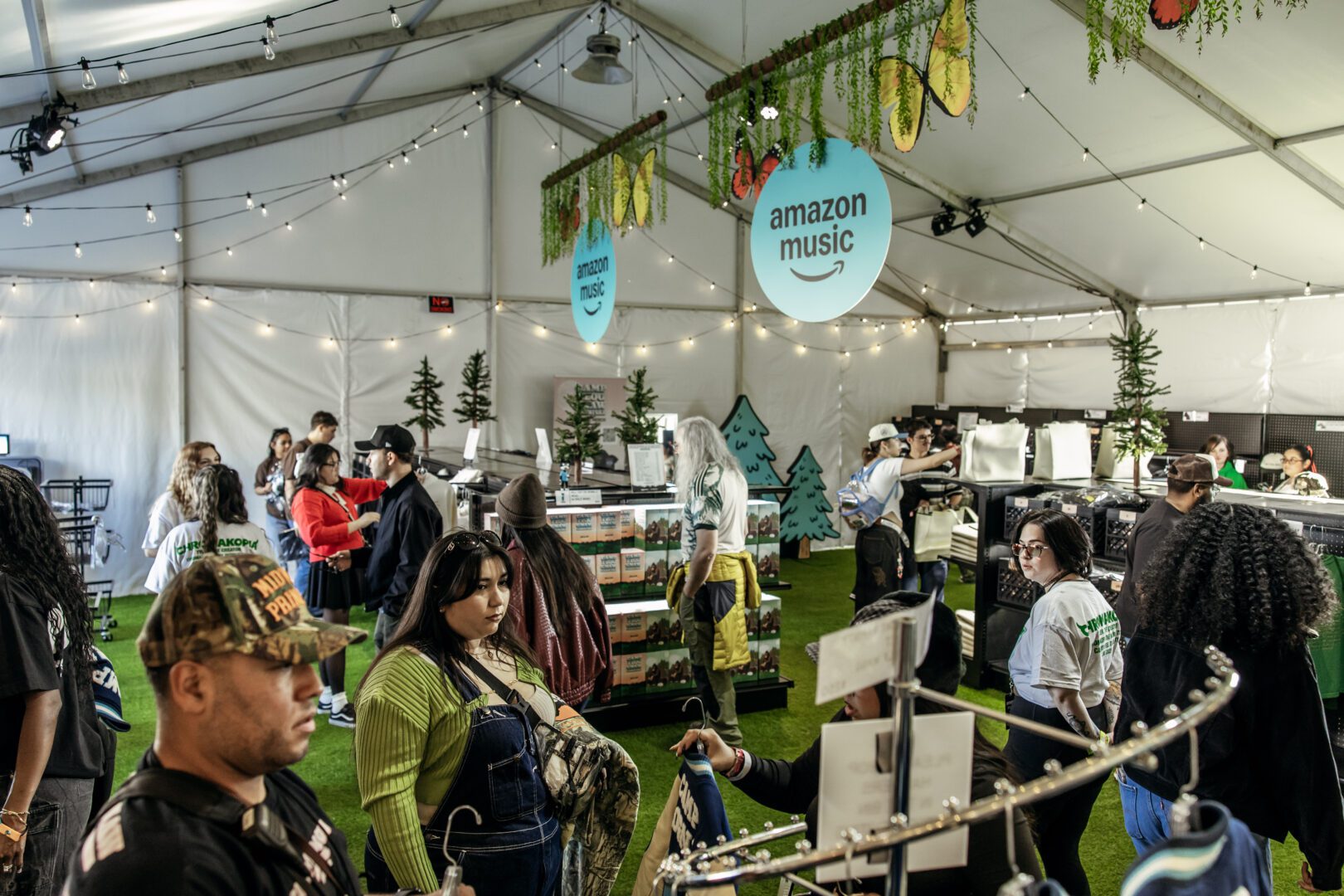
In 2025 Amazon Music brought a Just Walk Out-enabled store to Camp Flog Gnaw, Tyler the Creator’s annual Los Angeles Music festival. The deployment used a 40-by-40-foot VIP merchandise tent to offer an exclusive experience with specialized merchandise. The Camp Flog Gnaw case shows how retail design, access control, and checkout technology can work together. A defined VIP environment attracted high-intent customers. A temporary tent became a frictionless merchandise store. RFID lanes helped move shoppers through without the item-by-item scanning that can slow traditional booths during festival traffic surges.
At Crypto.com Arena, Just Walk Out RFID stores were deployed for Laufey and served thousands of fans. Amazon says the stores captured a large share of total merchandise sales.
The arena example brings the model back inside a familiar sports and entertainment building. It shows how RFID lanes can support artist-specific demand within a major venue, supplementing the existing merchandise operation, and helping capture sales during compressed event windows.
Amazon Music + Just Walk Out At-A-Glance
Mariah Carey, Las Vegas
Residency
RFID Use Case: Just Walk Out-enabled merchandise store
Camp Flog Gnaw
Festival
RFID Use Case: 40-by-40-foot VIP frictionless merchandise tent
LE SSERAFIM, Los Angeles and Seattle
Pop-ups
RFID Use Case: RFID-powered merchandise activations in non-traditional locations
Laufey, Crypto.com Arena
Arena concert
RFID Use Case: Just Walk Out RFID merchandise stores inside a major arena
BTS
Stadium Tour
RFID Use Case: Custom merch setups at all venues with RFID exit lanes across 26 U.S. shows
The deployments varied by format, but they pointed to the same conclusion: Just Walk Out RFID lanes are built for merchandise environments where the footprint changes, demand comes in bursts, and checkout speed determines how much of that demand can be converted.
Why RFID fits concert merchandise
Concert merchandise is a considered purchase. Fans browse designs, compare sizes, hold items up, and choose between apparel, accessories, collectibles, and limited-run items. Traditional merchandise booths depend on manual checkout and staffed registers, which can slow throughput during peak surges. Self-checkout still requires shoppers to scan items correctly.
For merchandise teams, the advantages go beyond speed. The technology integrates with existing POS and ERP systems and supports a range of payment providers. The RFID model also gives operators item-level data that can help inform assortment, pricing, and inventory planning for future events.
The format is built for flexibility. The lanes can work with existing fixtures and do not require cameras, ceiling sensors, or permanent construction. For tours, festivals, and pop-ups, they can be packed, shipped, and redeployed. According to Amazon, the lanes can ship in crates city to city and deploy in as little as two hours.
The technology also changes the labor model. When fewer associates are tied to register scanning, staff can shift toward customer service, restocking, sizing help, and fan engagement. In a merchandise environment where shoppers often need help finding the right item or size, that shift can improve both the retail experience and the checkout process.
Touring model and in-venue model
Just Walk Out RFID supports both touring and in-venue operating models.
In some cases, the RFID lanes travel with the artist and merchandise operator. That touring model follows the way concerts already move from city to city. The retail infrastructure can travel with the tour rather than relying on each venue to build a permanent solution.
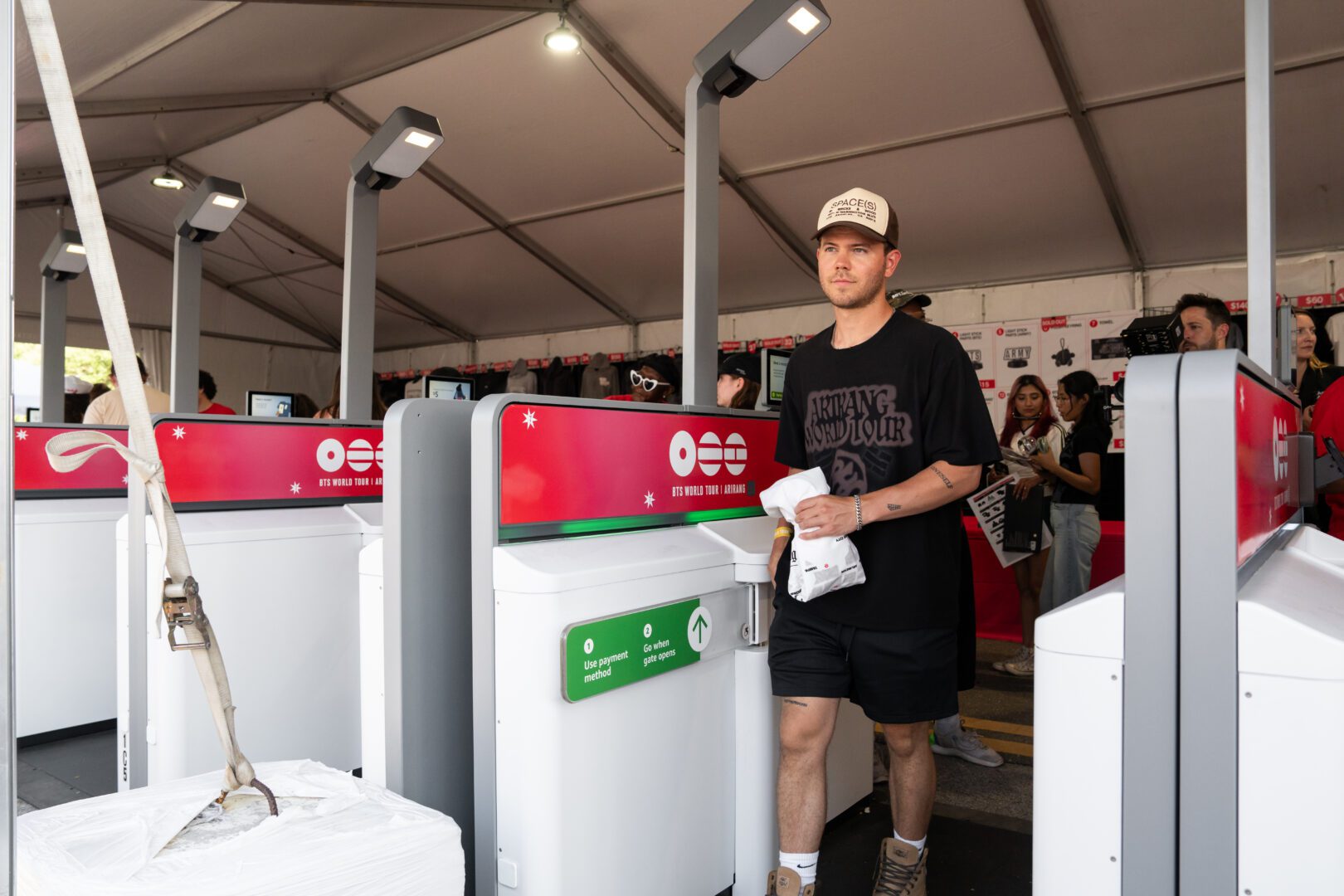
BTS’s US stadium tour is a good example of this in practice. Custom merchandise setups with RFID exit lanes were deployed across 26 shows in 10 markets and 10 merchandise presale days, giving fans a consistent retail experience at every stop without requiring permanent infrastructure at any location.
In other cases, the venue can accommodate an in-venue model, where RFID lanes are used for multiple artists or events. That approach may fit residencies, arenas with frequent concert programming, or venues looking to build a reusable retail capability across their event calendar.
Across our deployments, we’ve seen meaningful increases in the number of fans we’re able to serve during peak windows. When you cut the transaction time, you’re not just improving the experience for fans. You’re capturing demand that otherwise walks away.
Julia Heiser, Head of Amazon Music Live Merchandise
The touring model gives artists and merchandise operators more consistency. The in-venue model gives venues a reusable tool for events that do not justify a permanent store buildout but still generate meaningful merchandise demand.
For sports venues, that second model may be especially important. Teams and venue owners often think first about game-day retail. But modern stadiums and arenas are asked to perform across a much broader calendar. Concerts, college events, international matches, festivals, sponsor events, watch parties, and community programming all bring crowds with different buying behavior.
A portable RFID approach gives those operators another way to match retail infrastructure to the event instead of forcing every event through the same merchandise format.
What this signals for live entertainment
Live entertainment has spent years improving the front end of the fan journey: digital tickets, mobile entry, premium access, app-based engagement, and cashless payment. Yet, merchandise has not always evolved at the same pace.
Merchandise is an important part of the artist-fan experience. Our goal is to make the buying experience easier for fans while helping artists and their teams meet demand when fans are most ready to buy.
Julia Heiser, Head of Amazon Music Live Merchandise
Taken together, Amazon Music’s deployments show how checkout-free retail can adapt to a wide range of live entertainment settings without requiring permanent infrastructure. As the company continues to test the model across residencies, festivals, and arenas, the results point to a retail approach that benefits fans through shorter lines while giving operators and venues new ways to improve merchandise performance and operational efficiency.